业务连续性+·业务连续性问与答·Q12(下)业务连续性能力参考框架示例
问题:
如何描述业务连续性能力?它由哪些要素组成?如何规划、确定目标能力?
回答:
某企业业务连续性能力参考框架示例(8个使命领域,30项能力)
……续上期
3.某企业业务连续性能力参考框架(示例,Beta版)
每个组织的业务连续性能力都会因业务特点、空间(地理位置)和时间(风险态势)的不同而有所不同,下面给出的业务连续性能力参考框架仅供示意,包括8个使命领域的67项能力,其中规划能力、综合协调能力、风险评估与业务影响分析能力、沟通/报告与信息共享能力、自救与互救能力、关键资产管理/使用能力、舆情监测能力、应急通信能力、态势研判能力、指挥与控制能力、人员紧急替代能力在多个使命领域中出现,XXX危险先期处置能力和XXX业务恢复能力需要根据组织的风险与业务情况扩充,将其简单整合后共计30项能力,如下表所示:
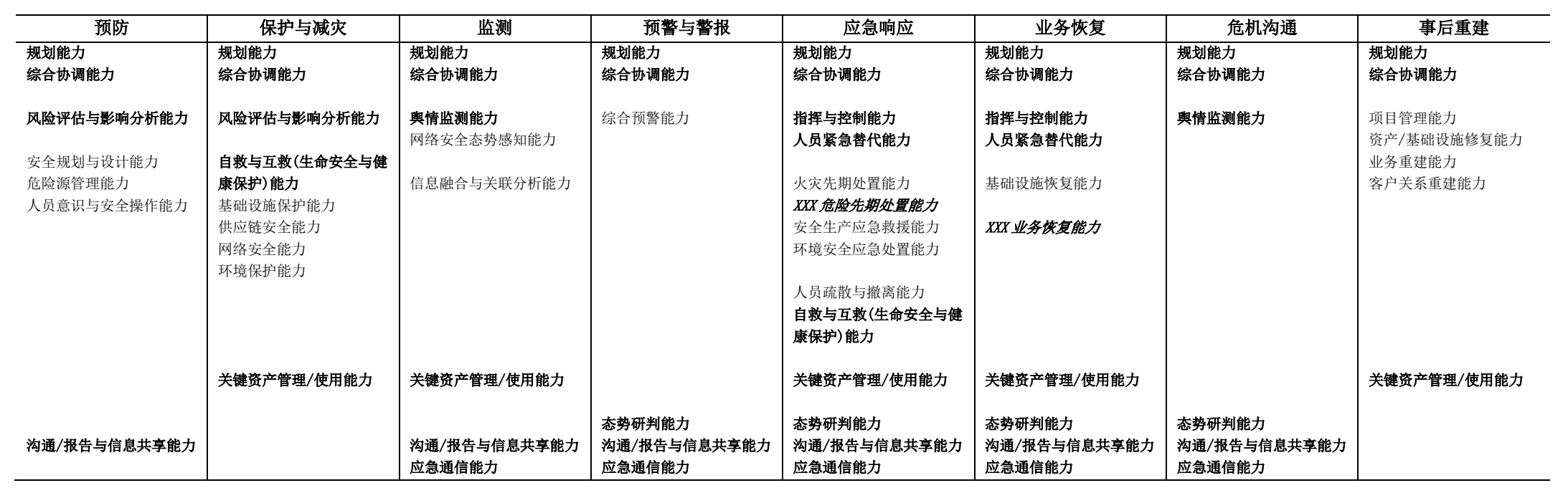
以上图表仅供示意参考,每个组织需要根据自己的情况,采用基于能力的规划过程,从”情景-任务-能力”分析得出自己的业务连续性能力清单。
附1:美国应急管理署核心能力清单(FEMA Core Capabilities list)
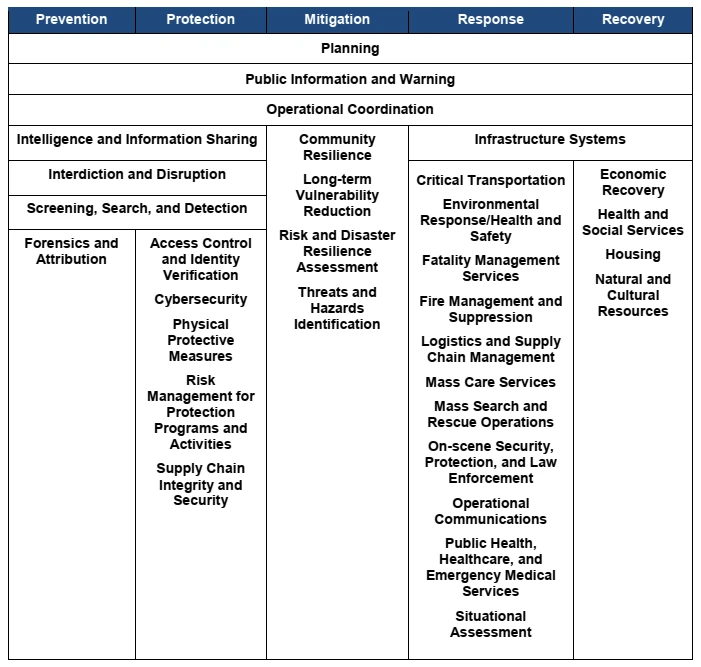
美国国土安全部应急管理署在2015年发布的国家准备目标(National Preparedness Goals)给出了5个使命领域和32项核心能力,如下图和下表所示:
| 使命领域 | 核心能力 |
|---|---|
| 预防 (Prevention) | 规划(Planning)、公共信息和预警(Public information and Warning)、行动协调(Operational coordination)、情报和信息共享(Intelligence and Information Sharing)、封锁和破坏(Interdiction and disruption)、筛查、搜索和检测(Screening, Search and Detection)、取证和归因(Forensics and Attribution) |
| 保护 (Protection) | 规划(Planning)、公共信息和预警(Public information and Warning)、行动协调(Operational coordination)、情报和信息共享(Intelligence and Information Sharing)、封锁和破坏(Interdiction and disruption)、筛查、搜索和检测(Screening, Search and Detection)、访问控制和身份验证(Access Control and Identity Verification)、网络安全(Cybersecurity)、物理保护措施(Physical Protective Measures)、保护性项目和活动的风险管理(Risk Management for Protection Program and Activities)、供应链完整性和安全(Supply Chain Integrity and Security) |
| 减灾 (Mitigation) | 规划(Planning)、公共信息和预警(Public information and Warning)、行动协调(Operational coordination)、社区韧性(Community Resilience)、长期脆弱性缩减(Long-Term Vulnerability Reduction)、风险和灾难韧性评估(Risk and Disaster Resilience Assessment)、威胁和危害识别(Threats and Hazards Identification) |
| 响应 (Response) | 规划(Planning)、公共信息和预警(Public information and Warning)、行动协调(Operational coordination)、基础设施系统(Infrastructure Systems)、关键运输(Critical Transportation)、环境响应/健康和安全(Environmental Response/Health and Safety)、死亡事故管理服务(Fatality Management Services)、消防管理和灭火(Fire Management and Suppression)、物流管理和供应链(Logistics and Supply Chain Management)、大众保健服务(Mass Care Services)、大规模搜索和救援行动(Mass Search and Rescue Operations)、现场安保和执法(On-Scene Security, Protection, and Law Enforcement)、行动沟通(Operational Communications)、公共健康、卫生和急救医疗服务(Public Health, Healthcare and Emergency Medical Services)、态势评估(Situational Assessment) |
| 恢复 (Recovery) | 规划(Planning)、公共信息和预警(Public information and Warning)、行动协调(Operational coordination)、基础设施系统(Infrastructure Systems)、经济恢复(Economic Recovery)、健康和社会服务(Health and Social Services)、住房(Housing)、自然和文化资源(Natural and Cultural Resources) |
附2:突发事件应对能力框架
李湖生在《应急准备体系规划建设理论与方法》第170、171页中提出,将希望形成的应急能力按照准备、减灾、预防、监测预警、应急响应、恢复重建等六个方面分门别类地列出,形成一个清单,就是”应急能力清单”。应急能力框架按照使命领域、战略目标、能力进行组织,包括57项能力,如下图所示:
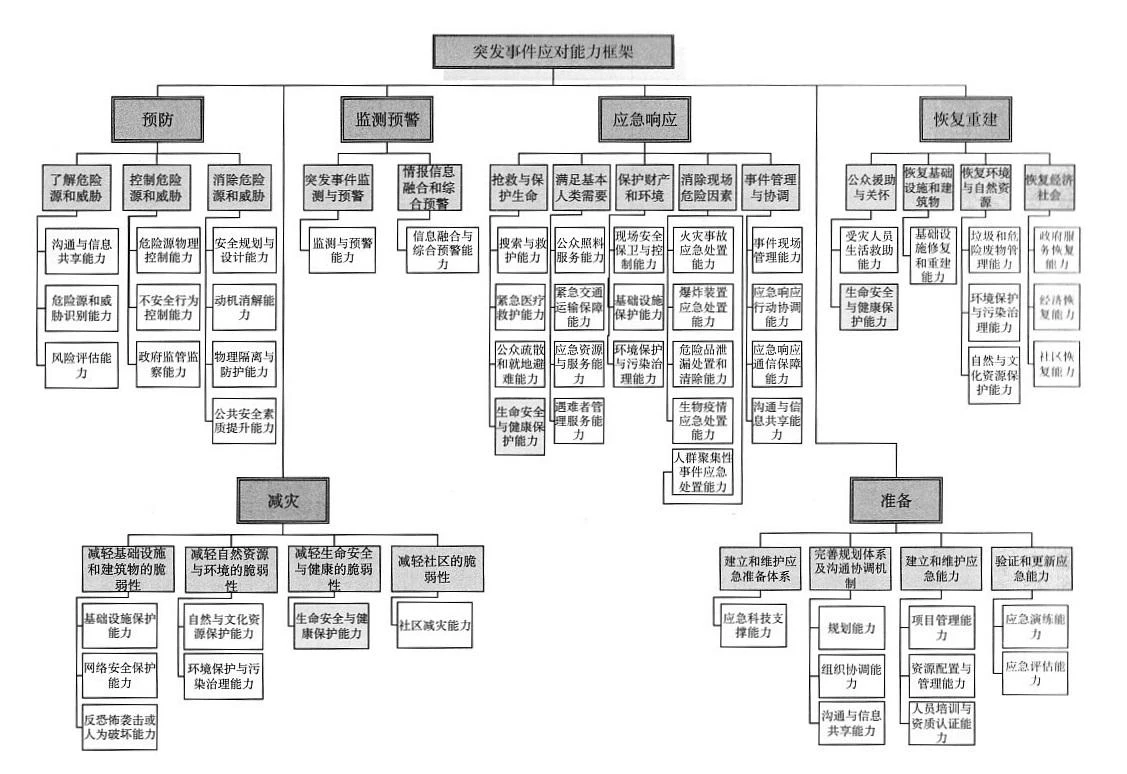
其中有8项能力可在2个或以上的使命领域应用。为避免重复,将它们只保留在一个使命领域中进行描述,最后得到49项不同的能力,如下表:
应急能力清单
减灾能力 基础设施保护能力、网络安全保护能力、反恐怖袭击或人为破坏能力、自然与文资源保护能力、环境保护与污染治理能力、生命安全与健康保护能力、社区减灾能力
准备能力 应急科技支撑有力、规划能力、组织协调能力、沟通与信息共享能力、项目管理能力、资源配置与管理能力、人员培训与资质认证能力、应急演练能力、应急评估能力
预防能力 危险源和威胁识别能力、风险评估能力、危险源物理控制能力、不安全行为控制能力、政府监管能力、安全规划与设计能力、动机消解能力、物理隔离与防护能力、公共安全素质提升能力
监测预警能力 监测与预警能力、信息融合与综合预警能力
应急响应能力 搜索与救护能力、紧急医疗救护能力、公众疏散和就地避难能力、公众照料服务能力、紧急交通运输保障能力、应急资源与服务能力、遇难者管理服务能力、现场安全保卫与控制能力、火灾事故应急处置能力、爆炸装置应急处置能力、危险品泄露处置和清除能力、生物疫情应急处置能力、人群聚集性事件应急处置能力、事件现场管理能力、应急响应行动协调能力、应急响应通信保障能力
恢复重建能力 受灾人员生活救助能力、基础设施修复和重建能力、垃圾和危险废物管理能力、政府服务恢复能力、经济恢复能力、社区恢复能力
附3:企业网络安全能力(Enterprise Cybersecurity)
Scott E.Donaldson, Stanley G.Sigel, Chris K.Williams和Abdul Aslam在《Enterprise Cybersecurity: How to Build a Successful Cyberdefense Program Against Advanced Threats》一书中给出了企业网络安全项目应涵盖的11个功能领域(functional area)的113种网络安全能力(cybersecurity capabilities),如下表所示:
系统管理(System Administration, SA)
- 堡垒主机(Bastion hosts)
- 带外管理(Out-of-Band(OOB) management)
- 网络隔离(Network isolation)
- 集成远程管理工具,KVM,电源控制(Integrated Lights-Out(ILO), Keyboard Video Mouse(KVM), and power controls)
- 虚拟化和存储区域网管理(Virtualization and Storage Area Network (SAN) management)
- 管理和服务分离(Separation of administration from services)
- 系统管理的多因素认证(Multi-factor authentication for system Administration(SAs))
- 管理员审计信息(Administrator audit trail(s))
- 命令记录和分析(Command logging and analytics)
网络安全(Network Security,NS)
- 交换和路由(Switches and routers)
- 软件定义网络(Software Defined Networking(SDN))
- 域名系统和动态主机协议(Domain Name System(DNS) and Dynamic Host Configuration Protocol(DHCP))
- 网络时间协议(Network Time Protocol(NTP))
- 网络服务管理(Network service management)
- 防火墙和虚拟机防火墙(Firewall and virtual machine firewall)
- 网络入侵检测/网络入侵防护系统(IDS/IPS)
- 无线联网(Wireless networking(Wi-Fi))
- 包截获(Packet intercept and capture)
- SSL窃听(Secure Sockets Layer(SSL) intercept)
- 网络访问控制(Network Access Control(NAC))
- VPN和IPSec(Virtual Private Networking(VPN) and Internet Protocol Security(IPSec))
- 网络流量分析(Network Traffic Analysis(NTA))
- 网络数据分析(Network Data Analytics(NDA))
应用安全(Application Security, AS)
- 电子邮件安全(E-mail security)
- Webshell检测(Webshell detection)
- 应用防火墙(Application firewalls)
- 数据库防火墙(Database firewalls)
- 正向代理和web过滤(forward proxy and web filters)
- 反向代理(reverse proxy)
- 数据泄露保护(Data Leakage Protection(DLP))
- 安全应用和数据库软件开发(Secure application and database software development)
- 软件代码漏洞分析(Software code vulnerability analysis)
端点、服务器和设备安全(Endpoint、Server and device security(ESDS))
- 本地管理员权限限制(Local administrator privilege restrictions)
- 计算机安全和记录政策(Computer security and logging policies)
- 端点和介质加密(Endpoint and media encryption)
- 调查取证映像支持(Forensic imaging support for investigation)
- 虚拟桌面/瘦客户机(Virtual desktop/thin clients)
- 移动设备管理(Mobile Device Management(MDM))
- 防病毒/防恶意软件(anti-virus/anit-malware)
- 应用白名单(Application whitelisting)
- 内存中的恶意软件检测(In-memory malware detection)
- 主机防火墙和入侵检测(Host firewall and intrusion detection)
- Gold序列软件映像(“Gold code” software images)
- 安全技术实施指南(Security Technical Implementation Guides(STIGs))
- 始终启用VPN联网(Always-on Virtual Private Networking(VPN))
- 文件完整性和变更监控(Fire integrity and change monitoring)
身份、认证和访问管理(Identity, Authentication, and Access Management,IAAM)
- 身份生命周期管理(Identity life cycle management)
- 企业目录(Enterprise directory)
- 多因素认证(Multi-factor authentication)
- 特权管理和访问控制(Privilege management and access control)
- 身份与访问审计信息和报告(Identify and access audit trail and reporting)
- 轻量级目录访问协议(Lightweight Directory Access Protocol(LDAP))
- Kerberos, Radius, 802.1x
- 联合认证(Federated authentication)
- 安全断言标记语言(Security Assertion Markup Language(SAML))
数据保护和密码学(Data Protection and Cryptography, DPC)
- SSL和TLS(Secure Socket Layer and Transport Layer Security)
- 数字证书-公钥基础设施(Digital Certificate-Public Key Infrastructure)
- 密钥硬件保护(智能卡、可信平台模块和硬件安全模块)(Key hardware protection(Smart cards, Trusted Platform Modules(TPMs) and Hard Security Modules(HSMs)))
- 一次口令和带外认证(One-Time Password(OTP) and Out-of-Band(OOB) authentication)
- 密钥生命周期管理(Key life cycle management)
- 数字签名(Digital signature)
- 复杂口令(Complex passwords)
- 数据加密和令牌化(Data encryption and tokenization)
- 强力攻击检测(Brute force attack detection)
- 数字权限管理(Digital Rights Management(DRM))
监控、漏洞和补丁管理(Monitoring, Vulnerabilities, and Patch Management(MVPM))
- 运行性能监控(Operational performance monitoring)
- 系统和网络监控(System and network monitoring)
- 系统配置变更检测(System configuration change detection)
- 特权与访问变更检测(Privilege and access change detection)
- 日志聚合(Log aggregation)
- 数据分析(Data analytics)
- 安全信息和事件管理(Security Information and Event Management, SIEM)
- 网络和计算机漏洞扫描(Network and computer vulnerability scanning)
- 渗透测试(Penetration testing)
- 补丁管理和部署(Patch management and deployment)
- 非法网络设备检测(Rogue network device detection)
- 非法无线接入点检测(Rogue wireless access point detection)
- 蜜罐、蜜网和蜜标(Honeypots/honeynets/honeytokens)
- 安全运行中心(Security Operation Center(SOC))
高可用性、灾难恢复和物理保护(High availability, Disaster Recovery, and Physical Protection(HADRPP))
- 集群(Clustering)
- 负载均衡,全局负载均衡(Load balancing, Global Server Load Balancing(GSLB))
- 网络故障切换,子网跨越(Network failover, subnet spanning)
- 虚拟机快照和克隆(Virtual machine snapshots and cloning)
- 数据镜像和复制(Data mirroring and replication)
- 备份和备份管理(Backups and backup management)
- 异地存储(Off-site storage)
- 设备保护(Facilities protection)
- 物理访问控制(Physical access control)
- 物理安全监控(Physical security monitoring)
事件响应(Incident Response,IR)
- 威胁信息(Threat Information)
- 事件跟踪(Incident tracking)
- 取证工具(Forensic tools)
- 计算机映像(Computer imaging)
- 入侵指标(Indicators of Compromise(IOCs))
- 黑洞服务器(Black hole server)
- 监管/法规协调(Regulatory/legal coordination)
资产管理和供应链(Asset Management and Supply Chain,AMSC)
- 资产管理数据库(Asset management databases)
- 配置管理数据库(Configuration management databases, CMDB)
- 变更管理数据库(Change management databases)
- 软件库和许可证管理(Software inventory and license management)
- 供应商认证过程(Supplier certification processes)
- 安全处置、回收和数据破坏(Secure disposal, recycling and data destruction)
政策、审计、电子披露和培训(Policy, Audit, E-Discovery, and Training, PAET)
- 治理、风险和合规,报告(Governance,Risk and Compliance(GRC), with reporting)
- 合规和控制框架(SOX,PCI等)(Compliance and control frameworks(SOX, PCI, others))
- 审计框架(Audit framework)
- 客户认证和认可(C&A)(Customer certification and accreditation)
- 政策和政策例外管理(Policy and policy exception management)
- 风险和威胁管理(Risk and threat management)
- 隐私合规(Privacy compliance)
- 电子披露工具(E-Discovery tools)
- 人员安全和背景调查(People security and background checks)
- 安全意识和培训(Security awareness and training)