《ISO 22361 - 危机管理 指南》中文简译(下)
写在前面:业务连续性、应急和危机管理虽各有侧重但又密切关联,相关专业人员在精通本领域知识、方法和技能的同时,必须了解(进而掌握)其它领域的知识和方法,方能在实践中有效协同,成功处置突发/扰断/危机事件。ISO 22301系列标准是业务连续性管理领域全球最佳实践的集大成者,之前我和一些专家志愿者团队翻译过相关资料(见下面译文及链接),这次,我带来了《ISO 22361:2022 – 危机管理 指南》的中文简译,供专业人员参考,也请各位专家多提修改意见。
《ISO 22301:2019中文简译》(2020年11月)
《ISO 22313:2020中文简译(上)》(2020年11月)
《ISO 22313:2020中文简译(下)》(2020年11月)
因中英文对照版全文较长,超过37000字,拆分为上、下两篇发布。
王曙 2024.04.21
……续上篇。
6 危机领导作用(Crisis leadership)
6.1 核心领导技能和特质(Core leadership skills and attributes)
6.1.1 总则(General)
在危机中有效领导的能力不宜因个人的任命或地位而被假定或被视为理所当然(见5.2.2)。管理人员在审查他们的培训和发展需求时会发现,提及危机管理技能很有用(见图4)。重要的是要认识到,有些人不适合处理危机情况和执行危机管理,这可以被确定为他们培训和演练的一部分。
The capability to lead effectively in a crisis should not be assumed, or taken for granted, as a result of an individual’s appointment or status (see 5.2.2). Managers reviewing their training and development needs can find it useful to refer to the crisis management skills (see Figure 4). It is important to recognize that some people are not suited to addressing crisis situations and enforcing crisis management which can be identified as part of their training and exercising.
领导者在危机中的一个重要作用是稳定局势。为了帮助做到这一点,领导者宜灌输信心,让每个参与人员发挥长处,在处理情况时提供明确的方向和控制。在混乱的情况中迅速建立秩序并不总是可能的,但领导者宜表现出正直、同理心、同情心、权威和决心。这将缓和紧张局势,为活动提供重点,并使相关方放心—负责任和称职的领导在管理局势。
An important function of a leader in a crisis is to stabilize the situation. To help do this, a leader should instil confidence and bring out the best from everyone involved, providing clear direction and control in handling the situation. It is not always possible to quickly impose order on a chaotic situation, but the leader should demonstrate integrity, empathy, compassion, authority and determination. This will defuse tensions, provide a focus for activity and reassure interested parties that responsible and competent leadership is in charge of the situation.
领导者宜提供冷静、关心并自信地参与,同时利用团队优势,鼓励创造性思维,在不指责文化中促进问责,及时采取行动,并明确承担起危机管理的适当和最终的责任。
The leader should provide calm, caring and assertive engagement while leveraging team strengths, encouraging creative thinking, promoting accountably within a no-blame culture, taking timely action, and unequivocally assuming appropriate and ultimate responsibility for the crisis management.
领导需要卓越的人际交往技能,如建立共识、团队合作、灵活性、沟通和在现有时间限制内找到选项的能力。领导者需要能够自如地响应危机带来的不确定性,并能够推动组织在非常混乱的情况下协调一致。
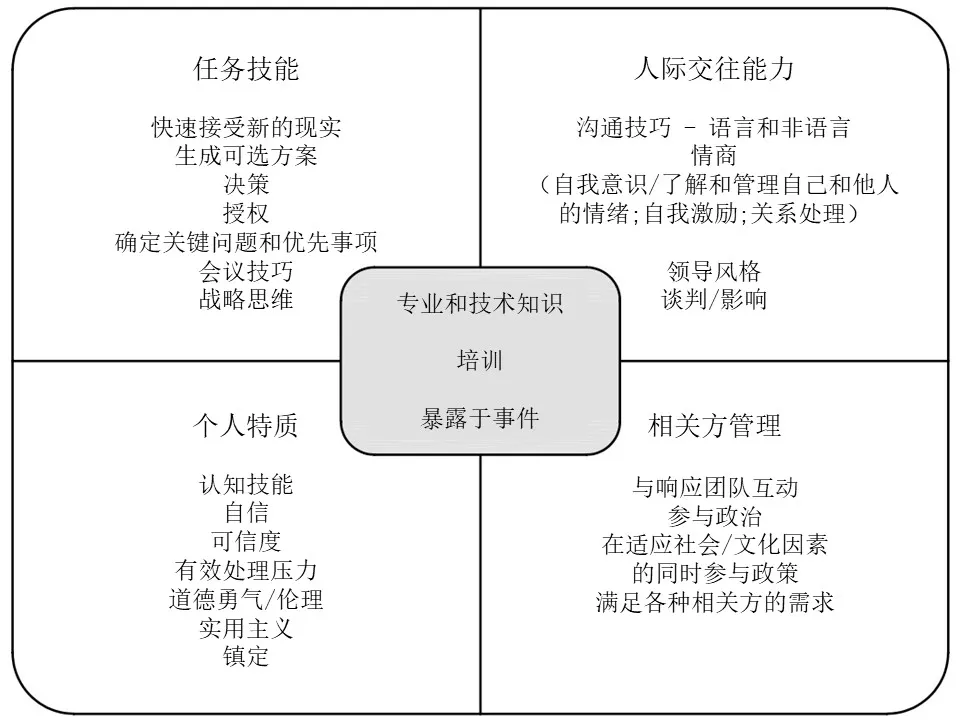
图 4 — 危机领导技能
Leadership needs excellent interpersonal skills such as consensus-building, teamwork, flexibility, communication and the ability to find options within existing time constraints. Leaders need to be comfortable dealing with the uncertainties that crises present and capable of driving an organization coherently through very confused situations.
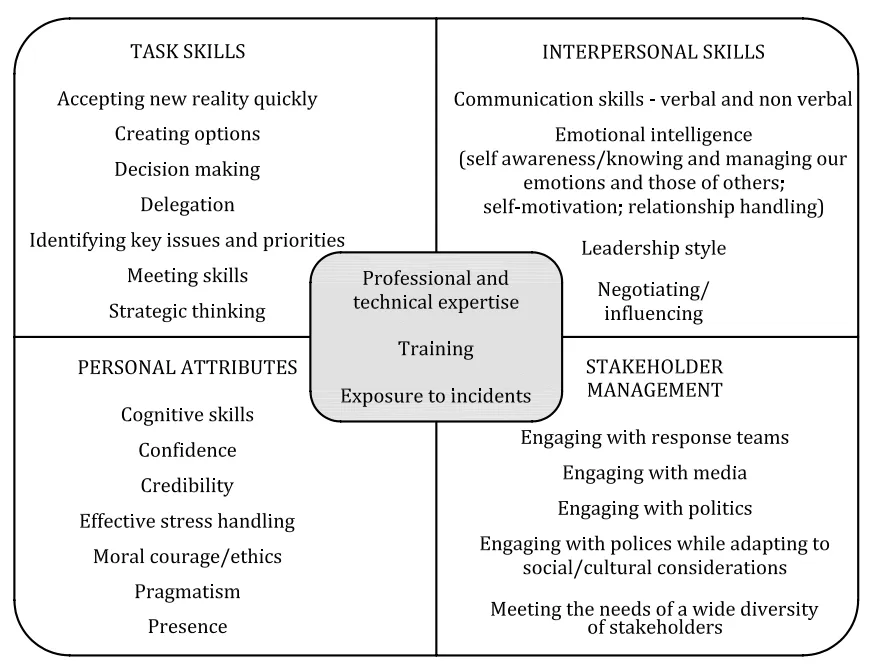
Figure 4 — Crisis leadership skills
在响应开始时,危机领导作用的一个重要方面是遵循商定的管理过程,确定并采取措施,尽可能消除原因,限制进一步损害的程度,遏制损害并减少进一步升级,以便后续响应活动有坚实的基础。
An important aspect of crisis leadership at the start of the response is to follow the agreed management process to identify and take steps that will eliminate the cause where possible, limit the extent of further damage, contain it and reduce further escalation so that subsequent response activities have a firm basis.
6.1.2 危机领导者的角色和职责(Role and responsibility of the crisis leader(s))
危机领导者宜:
a) 确保各团队被激活并正常运作;
b) 领导团队的执行会议,确定会议的时间和频率,并制定议程;
c) 随着危机的发展,审查CMT及其支持人员的组成和表现,并在必要时进行调整;
d) 促进共享态势感知;
e) 在危机中挑战证据和思维,并鼓励CMT也这样做(这可能包括抗议);
f) 决定策略,设定策略目标,并为参与响应的不同团队和部门确定目标;
g) 持续审查并在必要时进行更改,确保各部门、团队和机构根据其目标定期报告并取得适当进展;
h) 广泛征求意见,并就进展、策略和必需行动向最高管理者提供建议;
i) 酌情促进建立跨组织的共识,说明推翻任何意见或建议的理由;
j) 认识到困境,并理解需要根据当时已知的情况做出决定;
k) 确保决策以当时可获得的最佳信息为基础,并且富有同情心、相称、必要、合乎道德、合法,与组织的价值观保持一致;
l) 确保记录决策和基本理由并形成文件,以便事后进行审查和分析,从而确定经验教训;
m) 审查和授权关键的内部和相关方沟通的策略,以及沟通团队制作的公共和媒体信息;
n) 坚守其赋定的战略角色;
o) 指导和授权下属领导者;
p) 鼓励CMT集中精力确定必须做什么,而不是如何做的行动和技术细节;
q) 可行时尽早为恢复提供战略方向,并为此投入资源;
r) 创造性思考,准备好在正常运营和组织文化的范式之外思考,并考虑激进的解决方案;
s) 确定何时缩小或减少响应是可取和安全的;
t) 确保识别和跟进重要的经验、教训和学习(见条款 9 )。
The crisis leader(s) should:
ensure that the teams are activated and operating;
lead the team’s executive meetings, determine their timings and frequency, and set the agenda;
review the composition and performance of the CMT and its supporting personnel as the crisis evolves and adjust if necessary;
promote a shared situational awareness;
challenge the evidence and thinking in a crisis and encourage the CMT to do the same (this can include remonstration);
determine the strategy, set the strategic aim and identify objectives for the different teams and departments contributing to the response;
continually review and make changes as necessary, ensuring that departments, teams and agencies report regularly against their objectives and make appropriate progress;
consult widely and advise top management of progress, strategy and required actions;
promote the creation of a cross-organizational consensus, as appropriate, indicating the reasons for overriding any advice or recommendation;
recognize dilemmas, and understand that a decision needs to be taken based on what is known at the time;
ensure that decisions are based on the best information available at the time, and are compassionate, proportionate, necessary, ethical, legal and aligned with the organization’s values;
ensure that decisions and underlying rationale are recorded and documented to permit scrutiny and analysis after the event so that lessons can be identified;
review and authorize strategies for key internal and interested-party communications, and for public and media information produced by the communications team;
stay in their assigned strategic role;
direct and empower subordinate leaders;
encourage the CMT to concentrate on defining what has to be done and not the operational and technical detail of how it is to be done;
provide strategic direction for the recovery as early as is practicable, and commit resources for it;
think creatively, be prepared to think outside the paradigms of normal operations and organizational culture, and consider radical solutions;
determine when it is desirable and safe to scale down or stand down the response;
ensure identification and follow-up of important experiences, lessons and learning (see Clause 9).
6.2 福祉和可持续的危机响应(Well-being and sustainable crisis response)
6.2.1 危机管理响应人(Crisis management responders)
危机可能会对承担危机管理角色和职责的人提出特殊要求,并可能对个人的福祉造成不可接受的影响。危机本质上可能是持久的,响应者可能需要同时管理多个危机。
Crises can place exceptional demands on those assuming crisis management roles and responsibilities and can result in an unacceptable impact on the well-being of individuals. Crises can be persistent in nature, and responders can be required to manage multiple crises simultaneously.
最高管理者宜调查、审查和实施减轻此类影响的措施,并在个人或其家庭需要支持时提供帮助,包括:
分派监测个人或其家庭福祉的责任;
确定足够的人员来履行危机管理角色;
通过提供食物和饮料、休息区和住宿,支持响应者的福祉和疲劳管理;
培训、验证和意识;
处理令人痛苦的问题的资源;
提供专家资源和及时的个人支持,以解决组织无法分类的福祉问题(心理支持)。
Top management should investigate, review and implement measures to mitigate such impact and assist if individuals, or their families, need support including:
assigning responsibility for monitoring well-being of individuals or their families;
identifying sufficient personnel to fulfil crisis management roles;
supporting well-being and fatigue management for those responding, by providing food and beverages, rest areas and accommodation;
training, validation and awareness;
resources for dealing with distressing issues;
providing access to specialist resources and timely individual support to address well-being concerns that cannot be triaged by the organization (psychological support).
6.2.2 广泛的相关方影响(Wider interested-party impact)
最高管理者宜:
— 强调调查、审查和实施措施,以减轻对福祉的影响并提供支持;
— 对相关方可见、可联系和可用。
Top management should:
— emphasize the investigation, review and implementation of measures to mitigate the impact on well-being and provide support;
— be visible, contactable and available to interested parties.
7 战略危机决策(Strategic crisis decision- making)
7.1 总则(General)
决策是从多个选项中选择行动方案的过程。这种选择是基于决策者的价值观、权重因素(包括法律、技术、运营等)、优先事项和偏好,可以在单一或集体决策的基础上达成。决策过程中信息和数据的确切含义和交换的质量会影响决策或达成的共识水平。
Decision-making is the process that leads to the selection of a course of action from more than one option. This selection is based on the values, weight factors (including legal, technical, operational, etc.), priorities and preferences of the decision-maker(s), which can be reached on a singular or group decision basis. The quality of the precise meaning and exchange of information and data in the decisionmaking process can impact on the decision or the level of consensus achieved.
危机决策的挑战经常被低估、忽视或不为人所知,除非事后诸葛亮。决策者需要意识到“事后偏见”,即决策在事后看来似乎是有缺陷或错误的。因此,做决策或采取后续行动的依据宜与相关背景和信息一起记录,以便充分证明其合理性。
The challenge of crisis decision-making is frequently underestimated, ignored or unknown, except with the benefit of hindsight. Decision-makers need to be aware of “hindsight bias” whereby decisions, with the benefit of hindsight, seem flawed or erroneous. Consequently, the basis for making decisions or taking subsequent actions should be recorded with the relevant context and information so that they can be adequately justified.
即使是在日常环境中头脑最清醒、果断的资深高管,也可能在危机中不知所措,导致反常的错误、仓促的反应、回避或延迟决策。
Even the most clear-headed and decisive senior executive in day-to-day settings can be overwhelmed in a crisis, leading to uncharacteristic errors, hasty reactions, decision avoidance or delays.
糟糕的决策几乎肯定会加剧本已困难的局面,并可能对组织的声誉和价值观产生长期的负面影响。
Poor decision-making almost certainly exacerbates an already difficult situation and has potentially long-term negative impacts on the reputation and value of the organization.
危机响应的核心是根据现有的最佳信息做出决策,并将这些决策转化为指导和行动,以控制组织对事件的响应,最大程度地减少危机的影响,使其与组织的战略方向相一致。
At its core, crisis response involves making decisions based on the best information available and turning those decisions into direction and action that control the organization’s response to the events and minimize the impacts of the crisis that is compatible with the organization’s strategic direction.
存在各种各样的决策模型,主要考虑三个因素:
— 态势:态势感知涉及对这些因素的适当了解:正发生什么?有什么影响?问题是什么?有什么风险?会发生什么?正在做什么?
— 方向:希望是什么最终状态?危机响应的目的和目标是什么?哪些总体价值观和优先事项将为此提供信息和指导?
— 行动:宜监测和报告行动的有效性。需要决定什么?需要做什么?何时解决这种情况并达到预期的最终状态?
A wide range of decision-making models exists with three primary considerations:
— Situation: Situational awareness involves an appropriate knowledge of these factors: What is happening? What are the impacts? What are the issues? What are the risks? What can happen? What is being done about it?
— Direction: What end-state is desired? What is the aim and objectives of the crisis response? What overarching values and priorities will inform and guide this?
— Action: The effectiveness of actions should be monitored and reported on. What needs to be decided? What needs to be done? When to resolve the situation and achieve the desired end-state?
基本决策包括建立态势、确定相关问题、生成可选方案、参照期望的最终状态评价可选方案,并做出决策或选择,所有这些宜应与组织的价值观和战略优先事项相一致。理想情况下,危机中的战略决策也遵循一个过程,如图5所示。
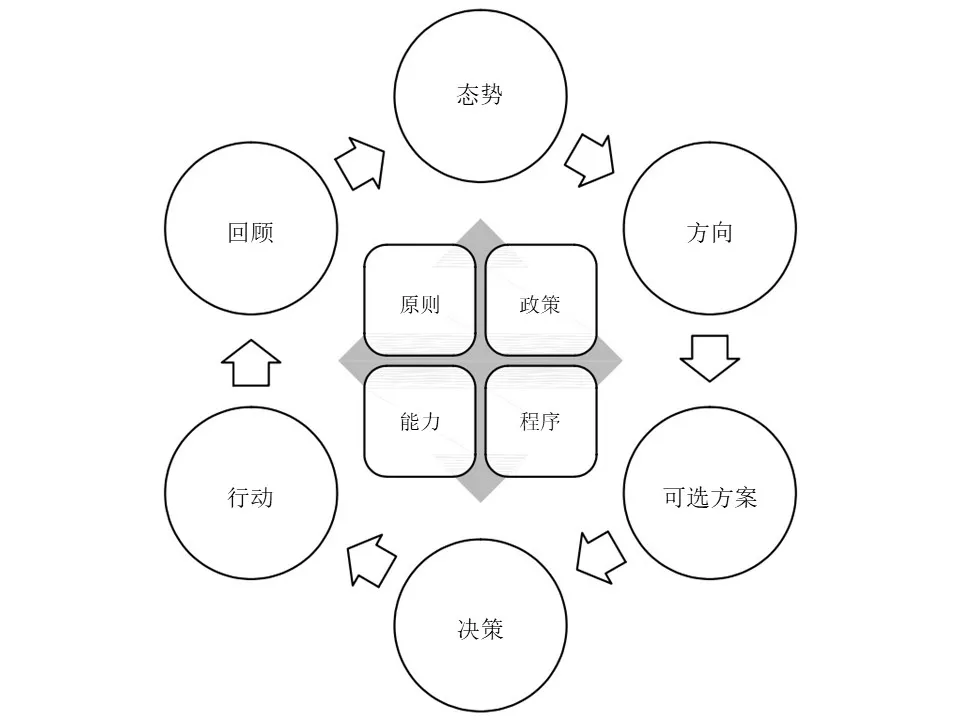
图5 — 危机中的战略决策
Basic decision-making includes establishing the situation, identifying the relevant issues, generating options, evaluating the options with reference to the desired end-state, and making a decision or choice, all of which should be consistent with the values and the strategic priorities of the organization. Ideally, strategic decision-making in a crisis also follows a process, such as in Figure 5.
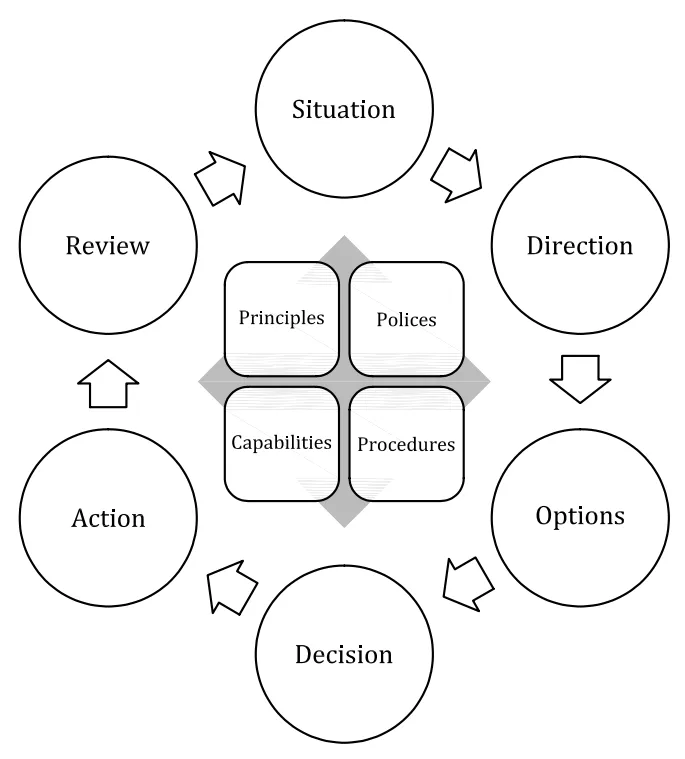
Figure 5 — Strategic decision-making in a crisis
这个过程似乎是合乎逻辑和直截了当的,除了这些类型的理性模型假设决策者完全知情,能够非常准确地确定选择的结果,并且完全理性地思考。然而,现实往往并非如此。
This process seems logical and straightforward, except that these types of rational models assume the decision-maker is fully informed, can determine the outcomes of a choice with perfect accuracy and is thinking entirely rationally. The reality, however, is often different.
7.2 决策具挑战性的原因(Why decision-making can be challenging)
人们在危机中的决策并不总是遵循明确的决策过程。危机的性质创造了一种环境,可能破坏危机响应期间战略和战术层面的理性决策过程。
Decision-making by people in a crisis does not always follow a clear-cut decision process. The nature of crises creates an environment that potentially derails the rational decision-making process at both strategic and tactical levels during crisis response.
危机管理将人和文化因素考虑在内,因为这些因素对危机管理的各个方面都有重大影响。人类行为和文化包括价值观、观念、信仰、态度、意图、个人能力和组织能力。重要的是意识到人类和文化因素,因为当作为个人和团队的一部分工作时,它们都会造成压力和带来安慰。
Crisis management takes human and cultural factors into account as these factors significantly influence all aspects of crisis management. Human behaviour and culture include values, perceptions, beliefs, attitudes, intentions, competencies and capabilities. It is important to be aware of human and cultural factors as they can both cause stress and comfort when working as individuals and as part of a group.
所有这些因素都给CMT和整个组织中其他受影响的人员带来了极大的心理压力。然而,由于缺乏知识和大量谣言、假设和错误信息,大多数危机都具有高度的不确定性,这对有效决策尤其构成威胁。不确定性会显著增加决策者的压力水平,对他们的认知过程产生负面影响,并增加决策过程有缺陷和糟糕决策的可能性。
All of these factors place extreme psychological pressures on the CMT and other affected personnel across the organization. However, the high levels of uncertainty that characterize the majority of crises, caused by lack of knowledge and abundance of rumours, assumptions and misinformation, are particularly threatening to effective decision-making. Uncertainty significantly increases a decisionmaker’s stress levels, which can negatively affect their cognitive processes, and increase the likelihood of flawed decision processes and poor decisions.
有效决策的挑战显而易见,但即使克服这些挑战也不能保证取得成功。然而,有效的决策大大增加了成功的可能性。
The challenges to effective decision-making are clear but even overcoming these challenges does not guarantee a successful outcome. However, effective decision-making significantly increases the likelihood of success.
7.3 困境,决策延迟,决策规避(Dilemmas, decision delay, decision avoidance)
危机决策有时以困境为特征,显而易见的解决方案不是对或错,而是更好或更坏,并且一个问题的解决方案可能会产生进一步的问题。这种困境往往有道德风险或逆向选择(做出的决定比其他决定的结果不那么糟糕)的因素,因此被认为没有好的结果,并可能导致不想要的结果。这些困境在决策者中引发了特别高的压力和焦虑。
Crisis decision-making is sometimes characterized by dilemmas for which apparent solutions are not right or wrong but better or worse and where solutions to one problem potentially generate further issue(s). Such dilemmas often have an element of moral hazard or adverse selection (making a decision that will have a less bad outcome than other decisions) and are therefore perceived as having no good outcome and potentially leading to undesirable outcomes. These dilemmas induce particularly high levels of stress and anxiety in the decision-maker.
虽然不确定性并不总是增加CMT主动做出大规模错误或错误选择的机会,但决策潜在结果的不确定性可能会阻碍或延迟 CMT执行决策。
While uncertainty does not always increase the chances of the CMT actively making large-scale errors or wrong choices, uncertainty over the potential outcome of a decision can block or delay the CMT from implementing decisions.
造成这种情况的一个主要原因是,CMT认为,对于一个事后可能被相关方判断为错误选择的决策,CMT负有责任。什么都不做比主动犯错误更不应该受到谴责。然而,未能在必要时做出关键决策和采取行动是最普遍的问题之一,它降低了危机响应的有效性和效率,并给危机带来了悲剧性的后果。宜明确的是,CMT成员不宜对危机期间善意做出的决策承担责任。然而,也宜认识到,组织仍然可以对其行为负责和承担责任。
One of the main reasons for this is the CMT’s perceived accountability over a decision that can, with hindsight, be judged by interested parties as having been the wrong choice. Doing nothing can be perceived as less blameworthy than an actively made mistake. However, the failure to make crucial decisions and act when required is one of the most pervasive issues that decreases the effectiveness and efficiency of the crisis response, and which has produced tragic outcomes to crises. It should be made clear that members of the CMT should not be held liable for decisions made in good faith during a crisis. However, it should also be recognized that the organization can still be held responsible and accountable for its actions.
CMT的决策可能受到特定相关方利益的影响,以实现特定的结果。组织宜监控外部影响,使其不会与组织的需要背道而驰。
The CMT can be influenced in its decision-making by specific interested party interests in order to achieve a particular outcome. The organization should monitor external influences so that they do not run contrary to the needs of the organization.
7.4 决策问题(Decision-making issues)
本文件无法全面介绍潜在的偏见和缺陷,但自我意识至关重要。危机领导者和决策者宜注意潜在问题,如:
— 群体思维;
— 确认偏见:倾向于寻找或优先考虑确认偏好的解释或选择的信息,而牺牲矛盾的信息(这可能是正确和相关的);
— 隧道视觉和注视错误;
— 一厢情愿的想法;
— 定型观念;
— 过分强调偏好信源;
— 未能质疑各种类型的假设(不允许横向思考);
对某一特定解释、立场或行动路径的过早结束。
This document cannot present the full range of potential biases and pitfalls, but self-awareness is critical. Crisis leaders and decision-makers should be mindful of potential issues, such as:
— groupthink;
— confirmation bias: the tendency to seek or prioritize information that confirms a preferred interpretation or option at the expense of contradictory information (which can be correct and relevant);
— tunnel vision and fixation errors;
— wishful thinking;
— stereotyping;
— disproportionate emphasis given to preferred sources;
— a failure to challenge assumptions of various types (not allowing lateral thinking);
— premature closure on a particular interpretation, position or path of action.
7.5 高效危机决策(Effective crisis decision-making)
组织宜确定在危机中提高战略决策有效性的因素,包括:
在组织层面实施政策、结构(团队和角色)、计划、过程和工具,以支持组织整体(特别是CMT)的危机管理能力;
个人和团队在危机决策环境中获得经验;
培训CMT成员使用决策技术,以减少不确定性对其认知能力的影响;
识别出决策薄弱的迹象,包括未能质疑证据、假设、方法、逻辑和结论,以及采取措施提供替代观点;
培养将决策过程的范围保持在战略层面的能力,为战术和行动层面的相关决策和行动提供充分的框架、授权和高层指导,而不进行微观管理和不必要的限制;
通过领导者创造和支持团队特征的发展来增强CMT决策文化,以解决任务冲突,并使成员在心理安全的氛围中表现出积极的行为。
The organization should identify the factors that improve the effectiveness of strategic decision-making in a crisis, including:
implementing, at an organizational level, policies, structures (teams and roles), plans, processes and tools to support the organization’s crisis management capability as a whole and the CMT in particular;
gaining experience in crisis decision-making environments as individuals and teams;
training CMT members in the use of decision techniques to reduce the effect of uncertainty on their cognitive abilities;
recognizing the signs of weak decision-making, including a failure to challenge evidence, assumptions, methods, logic and conclusions, and the adoption of measures to provide alternative perspectives;
developing the ability to keep the scope of the decision-making process at the strategic level, providing the adequate framework, delegation, high-level direction for dependent decisions and actions at the tactical and operational levels, without micromanaging and unnecessarily limiting them;
enhancing CMT decision-making culture by leaders creating and supporting the development of team characteristics that address task conflicts and allow members to feel safe in displaying proactive behaviour in a climate of psychological safety.
组织宜使决策者意识到所面临的挑战以及管理不确定性的可用工具和技术,并减少个人或集体决策错误的可能性。
The organization should make decision-makers aware of the challenges faced and the tools and techniques available to manage uncertainty and reduce the potential for individual or collective decision errors.
8 危机沟通(Crisis communication)
8.1 总则(General)
有效的沟通是成功危机管理的关键组成部分,也是组织响应任何危机不可或缺的一部分。它涵盖了为支持危机管理职能而设计和交付的内部和外部沟通。
Effective communication is a key component of successful crisis management and forms an integral part of the organization’s response to any crisis. It covers both internal and external communication, designed and delivered in support of the crisis management function.
危机沟通将组织定位为信息的中心来源,展示其对局势的控制并让相关方放心。
Crisis communication positions the organization as the central source of information, demonstrates its control of the situation and reassures interested parties.
组织宜:
— 发展在危机期间进行有效内部和外部沟通的能力;
— 制定并传递一致的信息,传达组织对危机的反应;
— 提供当时已知的信息,以及它正在做什么来解决问题和它在人员和组织层面的响应。
The organization should:
— develop an effective capability to communicate internally and externally during a crisis;
— develop and deliver a consistent message that conveys the organization’s reaction to a crisis;
— provide information that is known at the time, and what it is doing to address the issues and its responses at both a human and organizational level.
8.2 危机前准备(Pre-crisis preparation)
组织宜确保日常沟通管理与为管理潜在或实际危机而开展的活动之间的无缝过渡。有了现代通信,可以近乎实时地获得信息,这是关键,因为在危机情况下,时间是稀缺资源。组织宜准备好有效响应,并迅速从被动转变到主动阶段。
The organization should ensure the seamless transition between day-to-day management of communications and the activity undertaken to manage a potential or actual crisis. With modern communications, information can be available in near real time, which is key, given that time is a scarce resource in crisis situations. The organization should prepare to respond effectively and to quickly move from a reactive to a proactive phase.
组织宜制定危机沟通计划,规定沟通小组成员及其支持人员的角色、职责和采取的行动。
The organization should develop a crisis communication plan that sets out the roles, responsibilities and actions to be taken by members of the communications team and those supporting them.
危机沟通计划宜包括:
— 持有声明草案;
— 接听电话指导;
— 资料简介和新闻发布资料包;
— 新闻发布会地点;
— 可使用的媒体渠道清单;
— 帮助管理社交媒体监测和参与的工具和系统;
— 相关方名单和管理矩阵;
— 资源的联系方式,包括发言人。
The crisis communication plan should include:
— draft holding statements;
— guidance for call takers;
— fact sheets and press kits;
— locations for press conferences;
— list of media channels to be utilized;
— tools and systems to help manage social media monitoring and engagement;
— list of interested parties and a management matrix;
— contact information for resources, including spokespeople.
危机沟通计划宜:
— 制定管理沟通响应的结构化方法;
— 分配明确的职责和问责;
— 建立调用程序和经过测试的安排;
— 确定资源备选方案,以满足高水平的需求。
The crisis communication plan should:
— set out a structured approach to managing a communications response;
— assign clear responsibilities and accountabilities;
— establish procedures and tested arrangements for invocation;
— identify the options for resourcing to meet high levels of demand.
组织宜定期演练其危机沟通过程,以确保系统有效,团队做好准备。
The organization should regularly rehearse its crisis communication process to ensure that the systems are effective and that teams are prepared.
8.3 关系和声誉管理(Managing relationships and reputation)
与媒体接触是向相关方发送有目的的结构化信息的机会。这有助于避免关于局势和危机管理策略、行动和决策的错误信息和谣言。
Engaging with the media is an opportunity to send purposefully structured messaging to interested parties. This can help avoid misinformation and rumours about the situation and the crisis management strategy, actions and decisions.
组织宜主动与媒体接触,提供事件的准确描述,保护其声誉,并传达自己的信息,以反击不知情人士或恶意人员的说辞。
The organization should proactively engage with the media to provide an accurate account of the incident, protect its reputation, and communicate its own message to counter what can be said by uninformed people or those with harmful intentions.
这种关系的程度需要针对不同的媒体,以便进行最广泛的报道。宜特别注意社交媒体,因为它有可能快速传播信息,增加错误信息的风险。
The extent of this relationship needs to address different media in order to have the most extensive coverage. Special attention should be paid to social media given its potential to spread information quickly, increasing the risk of misinformation.
组织宜确定并考虑相关方的关切和意见,包括客户、员工、股东、供应商、监管机构、合作组织、公共机构和更广泛的社区。危机响应安排宜包括评估和理解对相关方重要并可能影响组织声誉的因素的能力。
The organization should identify and take into account the concerns and views of interested parties including customers, employees, shareholders, suppliers, regulators, partner organizations, public bodies and the wider community. Crisis response arrangements should include the capability to assess and understand the factors that are important to interested parties and which can impact the organization’s reputation.
组织宜制定一个过程来识别、分类和优先考虑关键相关方、他们的关注点、他们对危机响应对成功的潜在影响、预期问题以及适当的沟通方式。沟通团队宜跟踪与哪些相关方进行了沟通,何时、由谁以及何时进行下一次沟通。
注:更多信息,见ISO 22329。
The organization should have a process to identify, categorize and prioritize key interested parties, their concerns, their potential impact on the success of the crisis response anticipated questions, and appropriate means of communication. The communications team should track which interested parties have been communicated with, when, by whom and when the next communications will be.
NOTE For more information, see ISO 22329.
8.4 关键角色(Key roles)
8.4.1 沟通团队(Communication team)
组织宜建立沟通团队,包括:
— CMT的沟通负责人;
— 发言人或新闻官(见 8.4.2);
— 撰稿人和翻译;
— 媒体关系(见 8.4.3);
— 社交媒体(见 8.6 和 8.9);
— 接听电话的人员;
— 内部沟通;
— 相关方沟通。
The organization should establish a communication team, including:
— communications lead on the CMT;
— spokes people or press officer (see 8.4.2);
— writers and translators;
— media relations (see 8.4.3);
— social media (see 8.6 and 8.9);
— call-takers;
— internal communications;
— interested-party communications.
这些角色宜由现有资源涵盖,但不一定由个人承担。
These roles should be covered with in the resources available, but not necessarily by individual personnel.
危机领导者宜审查并授权沟通团队编制的关键沟通(见 6.1),并与有权批准沟通的人员合作(见 8.6)。
The crisis leader should review and authorize key communications produced by the communications team (see 6.1) and work in collaboration with those who have authority to approve communications (see 8.6).
8.4.2 发言人(Spokespeople)
组织宜培训并准备好发言人与外部相关方(如媒体、社区和家属)接触,使他们能够胜任这一角色。培训还宜考虑将要利用的各种媒体渠道。
The organization should train and prepare spokespeople to engage with the external interested parties (such as the media, community and next of kin) so that they are comfortable in the role. The training should also take into account the various media channels that will be utilized.
发言人的选择宜适合目标受众,并取决于危机的类型和影响。当多个发言人代表该组织提供信息时,组织宜确保信息的一致性。
The choice of spokespeople should be appropriate to the target audience and is dependent on the type and impact of the crisis. The organization should ensure the consistency of the message when more than one spokesperson is providing information on its behalf.
8.4.3 媒体关系(Media relations)
组织宜接触和监测媒体(包括社交媒体),以获得危机的早期预警,并评估外部关注的程度和重点以及未通过其他渠道报告的更广泛影响。
The organization should engage with and monitor the media (including social media) to gain an early warning of crises, and to assess the level and focus of external interest and the wider impacts not reported through other channels.
在危机响应阶段和危机后恢复期间,媒体接触和监测也很重要。
Engagement and monitoring of the media is also important during the crisis response phase and for post-crisis recovery.
组织宜分析所报告的详细信息以及外部“对话”和“趋势”,以验证组织的立场,并衡量其在处理问题、传达信息和开展希望参与的对话方面的有效性。
The organization should analyse the detailed information being reported and the external “conversations” and “trends” to allow for validation of the organization’s position and measure how effective it is in engaging with the issues, conveying its message and generating the conversation it wishes to engage in.
组织宜确定错误的媒体报道、兴趣转变、相关关注、参与高峰以及相关方能接触到的谣言和错误信息的程度。
The organization should identify incorrect media reports, shifts in interest, correlated interests, peaks of engagement, and the extent of rumour and misinformation that interested parties can access.
8.5 危机沟通策略(Crisis communication strategy)
组织宜制定由最高管理者批准的危机沟通策略,并辅以适当培训。它宜符合并促进组织的核心价值观,包括:
— 员工和内部相关方的沟通需要;
— 协调内部和外部沟通;
— 组织的核心信息在方法(风格和语气)上要适应不同的受众和所有媒介(渠道);
— 信息中的关键主题;
— 这些主题背后的支持材料;
— 所识别的并按优先级排列的相关方列表,以接收信息;
— 确定每个相关方群体的所有主要和次要通信手段;
— 沟通目标;
— 声誉风险;
— 提供有关要传输的信息级别和传输给谁的指导的接触计划。
The organization should develop a crisis communication strategy that is approved by top management and supported by appropriate training. It should align with and promote the organization’s core values and include:
— communication needs for employees and internal interested parties;
— coordinated internal and external communication;
— the organization’s core message to be adapted in the approach (style and tone) for different audiences and across all mediums (channels);
— key themes within the message;
— supporting material behind those themes;
— a list of identified and prioritized interested parties to receive information;
— identification of all primary and secondary means of communication for each interested party group;
— communications objectives;
— reputation risks;
— an engagement plan that provides guidance about the level of information that is to be transmitted and to whom.
8.6 危机沟通的关键原则和活动(Key principles and activities of crisis communication)
最高管理者宜授权沟通团队:
快速反应(这在一定程度上是由于信息进入公共领域的速度);
准备要说什么,由谁、何时、如何说以及为什么说;
及时做出回应,满足相关方的期望,并使组织能够在整个危机管理过程中将自己定位为可信的信息源;
迅速采取措施纠正误导性报告,并能够在其专业知识范围内讨论无争议的问题;
确定与谁(目标受众)沟通,以什么顺序以及谁来说;
预测危机的关键关注点、问题和情感相关因素,包括:发生了什么?为什么会发生这种事?谁该受到谴责?它是什么时候被发现的?对此做了些什么?
Top management should empower the communications team to:
respond quickly (this is due, in part, to the speed at which information can be in the public domain);
prepare what is to be said, by whom, when, how it will be said and why it will be said;
respond in a timely manner that meets interested party expectations and enables the organization to position itself as the trusted source of information throughout the management of the crisis;
take prompt steps to correct misleading reports and be able to discuss non-contentious issues within their expertise;
determine with whom to communicate (target audience), in what order and who says it;
anticipate key concerns, questions and emotional relatability factors of the crisis, including: What happened? Why did it happen? Who is to blame? When was it discovered? What is being done about it?
危机沟通的关键原则是:
— 准备工作:制定清晰、直接的沟通过程;
— 及时性:快速、恰当地沟通,表明将在可能的情况下会提供更多信息;
— 监测:跟踪正在发生的事情,确保适当的分类以便CMT优先决策,并由沟通团队起草,这至关重要;
— 适当的更新:发布已知信息,包括不确定性;少和经常发布比等待发布一切要好;
— 一致性和连续性:用一个声音说话,但不一定只有一个发言人;
— 透明度:在隐私和保密范围内采取公开和诚实的方法;
— 准确性:使用确凿的事实,避免谣言、猜测和假设;
— 问责:在适当和相关时道歉;
— 策略:制定核心信息和支持主题,并不断构建它们;
— 确定相关方的优先次序和需要沟通的内容;
— 同理心:在适当的时候要有同理心;
— 批准:知道谁有权签署沟通。
The key principles for crisis communication are:
— preparation: have a clear, straightforward communications process in place;
— timeliness: communicate quickly and appropriately, indicating that more information will be given when possible;
— monitoring: keeping track of what is happening, ensuring proper triaging in order to prioritize decision-making by the CMT, and drafting by the communications team, is critical;
— appropriate updates: release what is known including uncertainties; little and often is better than waiting to release everything;
— consistency and continuity: speak with one voice but not necessarily a single spokesperson;
— transparency: an open and honest approach within the boundaries of privacy and confidentiality;
— accuracy: use hard facts and avoid rumour, conjecture and assumptions;
— accountability: apologize when appropriate and relevant;
— strategy: develop core message(s) and the supporting themes, and keep building them;
— prioritization of the interested parties and what needs to be communicated;
— empathy: be empathetic when appropriate;
— approval: know who has the authority to sign-off communications.
8.7 信息一致性(Consistency of message)
组织宜:
— 确立明确的信息,并在所有形式的对外沟通和整个组织内分享其核心内容;
— 确保针对不同相关方的所有量身定制消息在信息传递中的一致性;
— 随着局势的发展解释变化,以保持一致性。图6概述了实际的危机沟通流程。
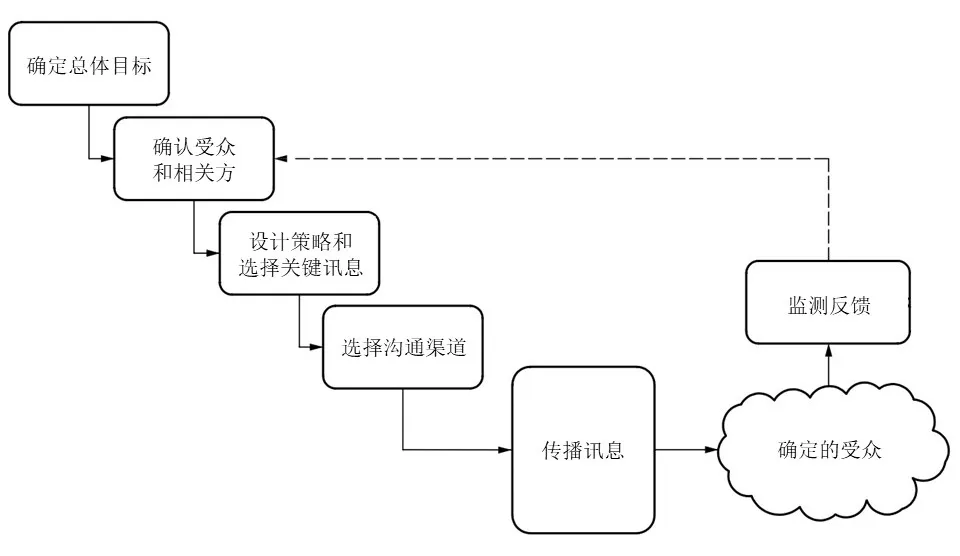
图6 – 危机沟通流
The organization should:
— establish a clear message and share its core content across all forms of outgoing communication and throughout the organization;
— ensure consistency in all messaging regarding all tailored messages for different interested parties;
— explain changes as the situation evolves to maintain consistency. Figure 6 outlines a practical crisis communication flow.
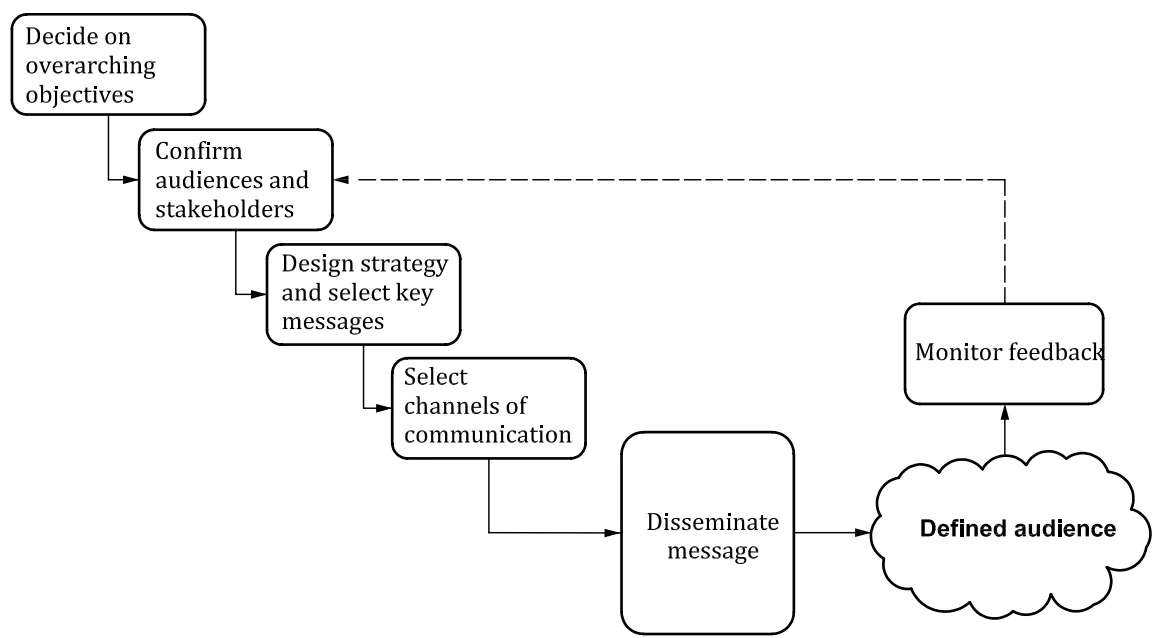
Figure 6 — Crisis communication flow
8.8 有效沟通的障碍(Barriers to effective communication)
组织宜认识到并规避有效危机沟通的障碍。这些障碍包括:
a) 信息不清晰,无法传达所需信息;
注:人们想知道的内容和他们需要知道的内容之间可能存在差异。
b) 未能使用适当的渠道接触到期望的受众;
c) 未能对目标受众使用相关或适当的语言,包括使用可能使阅读或倾听者感到困惑的复杂或技术性语言;
d) 未能回应公众反馈并相应地修改传出的讯息;
e) 未能识别出适当的优先事项;
f) 未能根据紧急程度及时批准讯息;
g) 未能识别和理解情境的情感相关性,未能有效沟通、同情他人、克服挑战和化解冲突;
h) 未能协调与参与相关方沟通的一致性。
The organization should recognize and circumvent the barriers to effective crisis communication. These barriers include:
unclear messages which do not convey the desired information;
NOTE There can be differences between what people want to know and what they need to know.
failure to use the appropriate channels to reach the desired audiences;
failure to use the relevant or appropriate language for the target audience including the use of complex or technical language which can confuse those reading or listening;
failure to respond to public feedback and amend outgoing messaging accordingly;
failure to recognize appropriate priorities;
failure to approve messaging in a timely manner against the level of urgency;
failure to identify and understand the emotional relatability of the situation, and communicate effectively, empathize with others, overcome challenges and defuse conflict;
failure to coordinate the consistency of communication with relevant participating interested parties.
组织宜协调跨地区、部门和相关方群体(如家属)以及与参与响应的其他组织的内部和外部沟通。
The organization should align both internal and external communications across regions, departments and interested party groups (e.g. next of kin) as well as with other organizations involved in the response.
8.9 社交媒体 – 机会和威胁(Social media — Opportunities and threats)
组织宜认识到,随着社交媒体以指数级加速信息传播,危机的知识将很快进入公共领域。社交媒体的流行既是机会也是威胁,是一种广泛传播的手段。
The organization should recognize that knowledge of a crisis will be in the public domain quickly as social media has exponentially accelerated the dissemination of information. The prevalence of social media presents an opportunity as well as a threat and is a means of wide-ranging communication.
CMT宜在危机发生前考虑社交媒体的重要性,以建立其危机管理能力。本文件没有提供建立和实施此策略的细节,但提供了需要考虑的关键理念。
The importance of social media should be considered by the CMT prior to a crisis in order to build its crisis management capabilities. This document does not provide detail on building and implementing such a strategy but provides the key ideas to be taken into consideration.
一些组织可能会发现,求助于沟通专业人员来建立这种能力和/或在正常业务和危机管理时期实施这种能力是一种优势。
It is likely that some organizations can find it an advantage to turn to communication professionals in order to build such a capability and/or to implement it in business-as-usual times as well as in crisis management times.
每个社交媒体渠道都是特定的,有自己的文化、公众和功能。社交媒体环境不断发展,但仍宜成为CMT可用知识的一部分。
Every social media channel is specific, with its own culture, public and functions. The social media environment constantly evolves but should still be part of the knowledge available to the CMT.
组织通常在一些基本的社交媒体平台上建立他们日常业务的社交媒体传播,以便在这些环境中生存和工作,并发展其形象和信誉。这些行动是管理危机局势所需的基本能力。然而,在危机中,CMT宜能够密切观察其他社交媒体上的流量,并准备好使用它们。
Organizations often build their business-as-usual social media communication on a few basic social media platforms in order to exist and work in these environments and to develop their image and credibility. These actions are the basic capabilities needed in order to be able to manage a crisis situation. Nevertheless, in a crisis, the CMT should be able to watch the traffic on other social media and be prepared to use them.
社交媒体既宜被视为沟通问题,也宜被视为管理问题。它宜考虑到个人和公众。社交媒体特有的是行动和活动的影响,或缺乏行动和活动的影响。
Social media should be considered as both a communication and a management issue. It should take into consideration the personnel as well as the public. What is specific to social media is the effect of action and activity or the lack of it.
9 培训,验证和从危机中学习(Training, validation and learning from crises)
9.1 总则(General)
宜通过培训嵌入危机管理能力及其支持组成部分,并通过应用相关工具和技术进行验证,以便向最高管理者和其他相关方提供保证。宜进行演练,以确保计划和过程符合目的,并提高能力。
Crisis management capabilities and their supporting components should be embedded through training and validated through the application of relevant tools and techniques in order to provide assurance to top management and other interested parties. Exercises should be carried out to ensure the plan and processes are fit for purpose and to improve competency.
通过持续改进建立危机管理能力的目标也可以通过组织的培训和演练活动以及从危机中吸取教训来支持。
The objective of building crisis management capabilities through continual improvement can also be supported by the organization’s training and exercising activities and learning the lessons identified from crises.
虽然有些培训侧重于计划的使用,但有些情况可能需要新的解决方案。培训包括领导力、网络协调和压力下的创新能力。组织提供的战略危机管理培训宜涉及临机处置和创新能力,并宜在当前计划不能应对局势时具有灵活性。
While some training focuses on the use of plans, some situations can require new solutions. Training includes leadership, network coordination and ability to innovate under stressful situations. The strategic crisis management training provided by the organization should address the ability to improvise, innovate and should be flexible when a situation is not addressed by current plans.
保证宜能够证明这些能力及其支持部分是可靠的,以便最高管理者可以确信,在合理可预见的情况下,这些能力将在需要时发挥作用。
Assurance should be able to demonstrate that those capabilities and their supporting components are reliable, such that top management can have confidence that they will work as and when required, under reasonably foreseeable circumstances.
组织宜使用验证活动的结果来加强组织的准备和韧性。培训、验证和学习这三项活动需要系统而严谨的方法,并承诺向最高管理者报告准确和适当的保证信息。
The organization should use the results of validation activities to strengthen an organization’s preparedness and resilience. Three activities – training, validation and learning – require a systematic and rigorous approach, and a commitment to reporting accurate and appropriate assurance information to top management.
9.2 发展人员能力(Developing competence)
人员能力发展是危机管理能力发展的关键过程,宜有系统地进行。
Developing competence is a key process of the development of a crisis management capability, and it should be done in a systematic fashion.
组织宜使用验证活动的结果来加强组织的准备和韧性。在发展危机管理能力时,重要的是做到两者兼顾,并按正确的顺序进行。
The organizations should use the results of validation activities to strengthen an organization’s preparedness and resilience. It is important in developing a crisis management capability to do both, and to do them in the right order.
图7总结了一种周期性方法,从一个商定结构的框架开始,包括一个组织自身和与他人合作准备、响应危机和从危机中恢复的过程和工作方式。
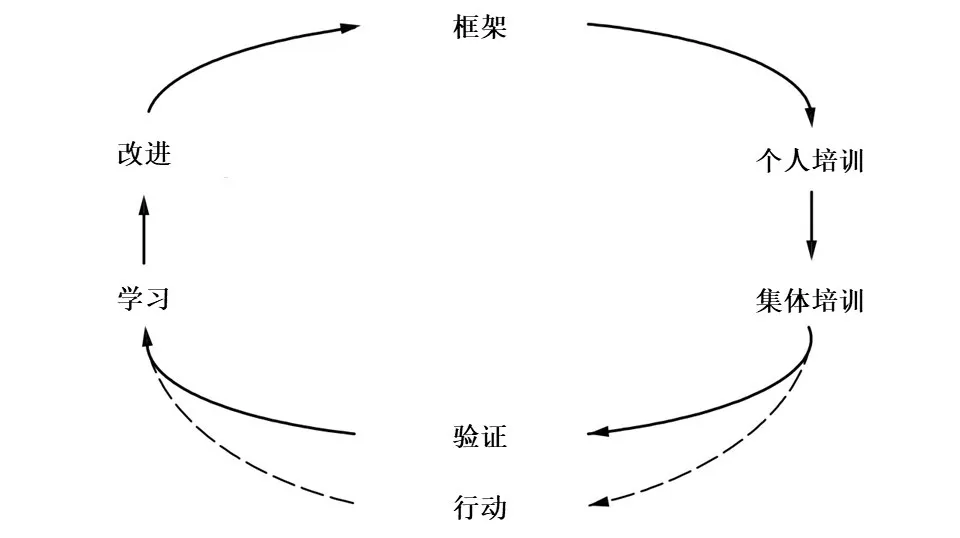
图7 – 培训 – 验证 – 学习循环
Figure 7 summarizes a cyclical approach, starting with a framework that is the agreed structures, including processes and ways of working by which an organization, by itself and in cooperation with others, will prepare for, respond to and recover from crises.
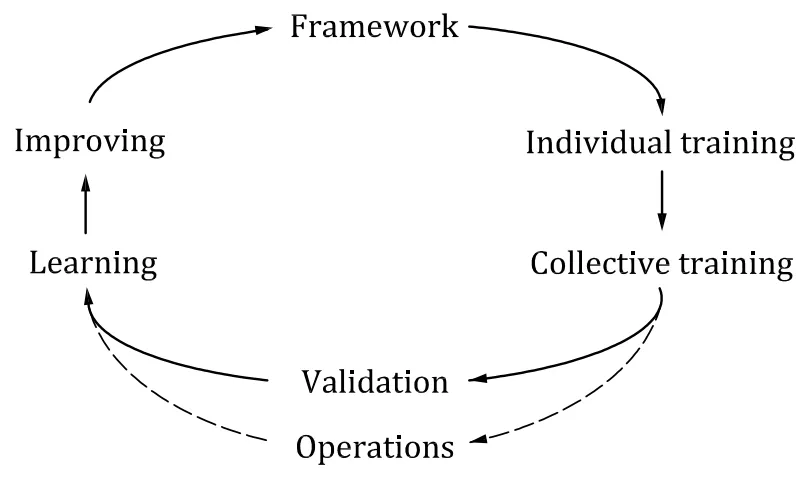
Figure 7 — The training–validation– learning cycle
9.3 培训(Training)
组织宜培训人员,以改善知识、技能和态度,并提高他们将要履行的危机管理职责的绩效。
The organization should train personnel to improve knowledge, skills and attitudes and to enhance the performance of the crisis management roles they will fulfil.
最高管理者宜应确定并充分利用可转移的技能,以减轻培训负担。
Top management should identify and make the best use of transferrable skills to reduce the training burden.
组织还宜为CMT安排现实和实用的培训,重点关注对组织具有战略意义的问题。
The organization should also arrange realistic and practical training for the CMT that focuses on issues of strategic significance to the organization.
组织宜培训决策者熟悉影响个人和群体决策的先天和后天偏见和行为的影响。
The organization should train decision-makers to be familiar with the impact of innate and learned biases and behaviours that influence individual and group decision-making.
对危机小组成员的培训宜侧重发展以下技能:
创建、维护和可视化共享的态势感知,并分析问题以评估其潜在的更广泛影响和最坏情景;
培养信息管理和分析方面的基本技能;
解构问题,以评估其规模、潜在持续时间、影响、相互依存关系和各个方面;
识别相关方、媒体和公众并与之进行有效沟通;
确定和应对对组织诚信、品牌、价值观和声誉的威胁(实际的和新出现的);
确定、阐明和审查战略、目的和目标,并保持战略重点,而不涉及行动细节;
展示可见的领导力和决策能力,并为在压力情况下工作的团队和人员提供清晰、明确的指导;
使用提供的工具协助履行危机管理职责;
认识到与保密、自由裁量权和判断有关的道德问题;
管理技能,如召开会议、记录行动和决策。
The training for the crisis team members should focus on development of the following skills:
creating, maintaining and visualizing shared situational awareness and analysing issues to evaluate their potential wider impacts and the worst-case scenario;
developing the underpinning skills in information management and analysis;
deconstructing problems, in order to assess their scale, potential duration, impacts, interdependencies and various dimensions;
identifying and communicating effectively with interested parties, the media and the public;
identifying and countering threats (actual and emerging) to the organization’s integrity, brand, values and reputation;
determining, articulating and reviewing strategy, aims and objectives, and maintaining strategic focus without being drawn into the operational detail;
demonstrating visible leadership and decision-making, and providing clear, unambiguous direction to teams and people working in stressful situations;
using tools provided to assist in the performance of crisis management roles;
recognizing ethical issues in relation to confidentiality, discretion and judgement;
administration skills such as establishing meetings, recording actions and decisions.
培训和发展这些技能的方法包括:
— 案例研究和模拟,以促进反思和类比学习(见 9.4);
— 考虑和分析反映具有挑战性和现实性程度的不确定性、困难、困境和复杂性的实例和案例研究;
— 以重要和适当水平逐步推行的速度和节奏,旨在(以可控的方式)反映危机管理对个人和团队的压力;
— 结构化和便利的汇报,以确定个人、团队和组织层面的优势和改进领域,并制定行动计划以跟进所确定的经验教训(这样,培训就被视为一个发展过程,而非孤立的事件);
— 记录并证明所做决策的合理性,以便危机管理人员的行动在以后可以接受审查(这有利于学习,并允许管理者在任何调查中解释他们的选择)。
Methods for training and developing such skills include:
— case studies and simulations to promote reflection and analogous learning (see 9.4);
— consideration and analysis of examples and case studies that reflect challenging and realistic levels of uncertainty, difficulty, dilemma and complexity;
— graduated introduction of significant and appropriate levels of pace and tempo, designed to reflect (in a controlled way) the stresses of crisis management on individuals and teams;
— a structured and facilitated debriefing to identify strengths and improvement areas at the personal, team, and organizational levels, with action planning to follow up on lessons identified (in this way, training is seen as a process of development rather than as an isolated event);
— recording and justifying decisions taken, so that the actions of the crisis managers are open to examination later (this facilitates learning and allows managers to account for their choices during any enquiry).
组织宜提供实用的学习经验,以提高决策能力并制定创造性的、建设性解决方案。这种学习方式为个人和群体提了供:
— 能够解决问题的经验(强大的动机和学习刺激);
— 提高解决不可预见和复杂问题的能力。
The organization should provide a practical, learning experience to improve decision-making ability and develop creative-constructive solutions. This way of learning provides to the individual and the group:
— experience of being able to solve (strong motivator and learning stimulus);
— increased competence in solving unforeseen and complex problems.
9.4 演练(Exercising)
演练的目的是:
— 演练危机管理过程和活动;
— 评估能力及其支持组成部分;
— 鼓励和促进每个人质疑自己和组织是否准备好和适合进行危机管理;
— 建立对其行动的信心;
— 培养在不利和压力条件下团队合作的能力。
The purpose of exercising is to:
— rehearse crisis management processes and activities;
— evaluate capabilities and their supporting components;
— encourage and facilitate each individual to question their own and the organization’s readiness and fitness for crisis management;
— build confidence in their operation;
— develop the ability to work as a team under adverse and stressful conditions.
组织宜为演练设定明确的目标。在一次演练中演练所有方面是不太可能有成效的。相反,组织宜专注于特定的危机管理能力和职能,并定期演练以持续推进组织的整体准备工作。
The organization should set clear objectives for exercises. Exercising everything in a single exercise is unlikely to be productive. Instead, the organization should focus on specific crisis management capabilities and functions and perform regular exercises to continue to progress the organization’s overall readiness.
演练及其情景宜具有适当的挑战性和复杂性,反映危机的一般特征。如果它们要具有可信度,并基于对假想危机影响的合理估计,它们也宜是现实的。情景设计本身就是一种非常有用的学习方式,可以探索风险,并测试关于如何管理危机的假设的局限性。
Exercises and their scenarios should be appropriately challenging and complex, reflecting the general characteristics of crises. They should also be realistic if they are to have credibility and be based on a reasonable estimate of the impact of the notional crisis. Scenario design is, in itself, a very useful way of learning by exploring risks, as well as testing the limits of assumptions about how crises can be managed.
组织宜选择最符合其目标和要求的演练类型或方法。
The organization should select the exercise type or methodology that best meets its objectives and requirements.
不同的演练可用于支持组织的培训、演练和测试要求。
Different exercises are available to support an organization’s training, exercising and testing requirements.
演练提供了一个机会,可以创造一个紧张和压力增强的环境,并提升危机管理能力。
注:演练和测试的更多指导,在ISO 22398和ISO 22313 中给出。
Exercises provide an opportunity to create the environment of increased stress and pressure and enhanced crisis management capabilities.
NOTE Further guidance on exercising and testing is given in ISO 22398 and ISO 22313.
9.5 验证(Validation)
验证描述了一系列方法和活动,以判断危机管理能力及其支持组成部分在多大程度上满足为其确定的期望的形式提供保证的基础。组织宜记录和传播演练和“真实”危机响应的验证证据,作为提高其准备度和韧性的方式。
Validation describes a set of approaches and activities which provide the basis for assurance in the form of a judgement on the degree to which the crisis management capabilities and their supporting components meet the expectations that have been defined for them. The organization should record and disseminate evidence of validation from exercises and “real” crises responses as a means to improving its readiness and resilience.
演练通常被视为验证的同义词。有许多不同的验证方法,包括自评估、同行评审或外部审查,以及各种方法和技术,包括危机后报告、模拟、推演、分析和建模技术以及红队法。组织宜考虑使用演练和更广泛的方法和技术。
Exercises are often regarded as synonymous with validation. There are many different approaches to validation, which can include self-assessment, peer review or external scrutiny, and a variety of approaches and techniques, including post-crisis reporting, simulations, war-gaming, analytic and modelling techniques, and red teaming. The organization should consider using exercises and a wider range of approaches and techniques.
最高管理者宜阐明、批准并显式支持组织的验证和保证政策,以证明韧性是组织核心业务的一部分。
Top management should articulate, approve and visibly support the organization’s policy on validation and assurance to demonstrate that resilience is part of the organization’s core business.
9.6 评价和学习(Evaluating and learning)
组织宜使用演练来排练和评估安排,让员工练习他们被分配和培训的角色,并确认安排确实有效。这是组织自我分析的机会,需要高度的反思性和诚实的绩效评估。学习和汇报问题宜牢记政治立场和保密性,运用谨慎和良好的判断力。
The organization should use exercises to rehearse and evaluate arrangements, give personnel practice in the roles they have been assigned and trained for, and confirm that arrangements actually work. This is an opportunity for organizational self-analysis that demands a high level of reflexivity and an honest appraisal of performance. Learning and debriefing issues should bear in mind political positions and confidentiality using discretion and good judgement.
如果人员和单元或整个组织需要改进,则宜建设性地暴露和管理缺陷,而不是掩盖以保护声誉或避免令人不安的现实。
If personnel and units, or the entire organization, require improvement, deficiencies should be exposed and managed constructively rather than covered up to protect reputations or avoid uncomfortable realities.
演练计划宜纳入严格的汇报和分析,以陈述已确定的经验教训。然后宜提出并执行行动计划。
The exercise plan should include a rigorous debriefing and analysis that leads to a statement of the lessons that have been identified. An action plan should then be raised and implemented.
一旦作出改进和纠正,并在随后的评价中得到证实,就可以称其为“经验教训”。
Once improvements and corrections have been made, and have been proven in subsequent evaluations, it will be possible to call them “lessons learned”.
危机后的演练活动宜谨慎管理,包括:
— 结构化汇报;
— 审查和评价决策及其执行情况;
— 确定观察到的优势和改进机会;
— 分析演练达到目标的程度;
— 已确定的教训及其与未来能力的相关性;
— 落实这些教训的行动以及报告和确认的方式;
— 将这些结果“读进”到演练项目集的其余部分。
Post-crisis exercise activity should be carefully managed and include:
— structured debriefings;
— scrutiny and evaluation of decisions and their implementation;
— identification of observed strengths and opportunities for improvement;
— analysis of the extent to which the exercise met its aim;
— lessons that have been identified and their relevance to future capability;
— an action to implement those lessons and a means of reporting and confirming this;
— a “read forward” of these results into the rest of the exercise programme.
演练的结果宜是提高团队能力以及个人技能和意识。培训和演练宜是持续改进的过程。为了能够进行建设和发展,演练的设计宜考虑到以前发展的优势,并包括足够程度的挑战,以便确定改进机会并积极刺激进化。
The results of exercising should be an increase in team capability and individual skills and awareness. Training and exercising should be continual improvement processes. To enable building and development, exercises should be designed to allow for the application of strengths previously developed and include an adequate level of challenges so that opportunities for improvement are identified and evolution is positively stimulated.
组织宜告知危机管理人员,危机后审查的目的不是评估他们的决策是否正确,而是根据当时的已知情况,这些决策是否合理。“可辩护的”决策是必要的、相称的、合法的、合乎道德的,并且符合组织的价值观。个人决策者和整个组织都宜理解这种期望。
The organization should inform crisis managers that post-crisis reviews are not intended to assess whether their decisions were correct, but whether they were defensible given what was known at the time. A “defensible” decision is one that was necessary, proportionate, legal, ethical and consistent with the values of the organization. This expectation should be understood by individual decision-makers and across the organization.
参考文献(Bibliography)
[1] ISO 22398,社会安全 — 演练指南
[2] ISO 22329,安全和韧性 — 应急管理 — 紧急情况下社交媒体使用指南
[3] ISO 22313,安全和韧性 — 业务连续性管理体系 — ISO 22301使用指南
[1] ISO 22398, Societal security — Guidelines for exercises
[2] ISO 22329, Security and resilience — Emergency management — Guidelines for the use of social media in emergencies
[3] ISO 22313, Security and resilience — Business continuity management systems — Guidance on the use of ISO 22301
原文发表于公众号”业务连续性+” | 原文链接